Japanese court rejects nickname ballots in mayoral election, invalidates victory
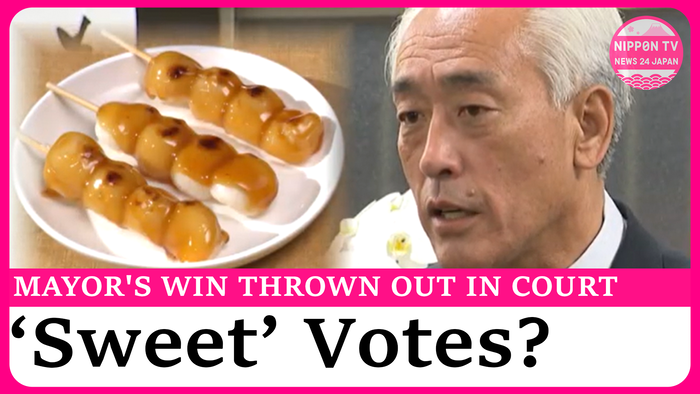
The mayor of Kamisu in Ibaraki Prefecture, northeast of Tokyo, held a news conference on September 3.
S/ Kiuchi Toshiyuki (65), Kamisu Mayor / It is disappointing and regrettable that our argument was not accepted at all. I have been the son of a Japanese confectionery shop owner since I was born. When I was young, ours was the only Japanese sweet shop. There were no other candidates who ran from a Japanese confectionery shop.
Kiuchi Toshiyuki expressed dissatisfaction after a court ruling invalidated his election victory.
In the Kamisu mayoral election held last November, the only two candidates were Kiuchi and former Mayor Ishida Susumu.
Each candidate received the exact same number of votes at 16,724.
Based on legal provisions, Kiuchi won through a lottery drawing.
Kiuchi comes from a family that operates a Japanese confectionery company with a history of over 120 years.
He said local residents often call him by nicknames such as “Manjuya,” which means sweet bun shop, and “Toshi of Manjuya.”
That led to the current dispute.
Among the votes counted for Kiuchi were a ballot marked “Manjuya” and another that had “Dango-san,” or Mister rice-flour balls, written on it.
Former Mayor Ishida raised an objection to these two ballots.
S/ Ishida Susumu (68), Former Kamisu Mayor / Some people may understand who “manjuya-san” may refer to. However, it is not something that many people recognize as a substitute for a name. It is extremely unclear why the Kamisu election administration commission determined that “manju” and “dango” were valid.
While the election administration commission of Kamisu city declared Kiuchi the winner, the commission of Ibaraki Prefecture did not recognize the two questionable ballots as valid and issued a ruling that voided his election victory.
Kiuchi filed a lawsuit seeking the revocation of the prefectural election commission's decision.
The Tokyo High Court deliberated on whether the ballots marked “Manjuya” and “Dango-san” were valid.
The court came to the decision that the ballots do not clearly refer to Kiuchi.
It found that the terms cannot be considered as identifiers customarily recognized throughout the entire city to refer to him as there were at least nine stores that mainly handle traditional Japanese sweets like manju and dango.
The court ruled Kiuchi’s election invalid.
Kiuchi appeared dissatisfied with the court’s decision.
S/ Kiuchi Toshiyuki, Kamisu Mayor / I am arguing that I grew up being known as the son of the “manju” shop. People normally call me “Manjuya.” They do not call me “Kiuchi,” they call me “Manjuya.”
Ishida also shared his thoughts.
S/ Ishida Susumu, Former Kamisu Mayor / I believe the decisions by the prefectural election commission and the Tokyo High Court were appropriate. I hope to return to the post quickly. As the mayor who received even one vote more, I want to fulfill my accountability to the public and move city administration forward.
Kiuchi says he is considering whether to appeal the high court’s ruling to the Supreme Court.