
Ishiba to step down as Japanese prime minister
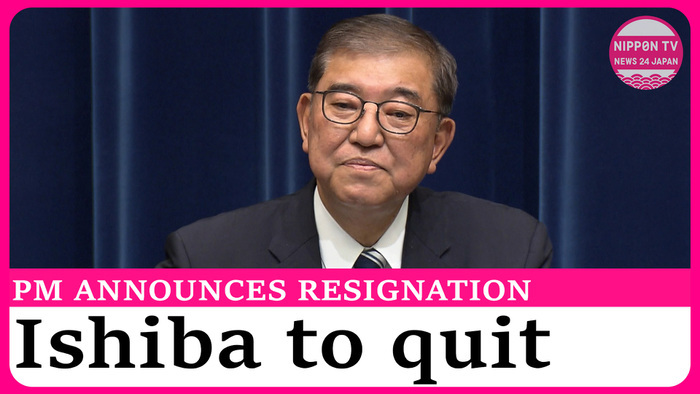
S/ Ishiba Shigeru, Prime Minister / I have decided to step down as president of the Liberal Democratic Party. I have been saying that this post is not something to cling to and that I will decide at an appropriate time after doing what needs to be done. I think the time is appropriate now that a phase of the negotiations concerning US tariff measures has been completed, and I have decided to make way for my successor.
Prime Minister Ishiba Shigeru, who took office in October last year, announced his resignation at a hastily arranged press conference on September 7.
He said he does not intend to run in the election to choose the next president of the ruling Liberal Democratic Party.
The move came a day before the LDP was planning to start asking member lawmakers what they think about holding an extraordinary leadership election.
Ishiba said he made his announcement before this, explaining that the process could have created a decisive division within the party.
He noted that the LDP must make a fresh start as if the party has gone through a dissolution.
Asked if he considered calling a snap lower house election while deciding whether to step down, Ishiba said he will not deny that he thought about various things.
He also expressed regret that his government could not achieve results in efforts to resolve outstanding issues with North Korea and repatriate all abductees.
Following the announcement, former Minister of State for Economic Security Kobayashi Takayuki, considered to be a candidate to succeed Ishiba, said he will think about running in the next LDP presidential election.
S/ Kobayashi Takayuki, Former State Minister / I want to consult with my colleagues about what I myself can do as a lawmaker who belongs to the party.
Meanwhile, Noda Yoshihiko, leader of the main opposition Constitutional Democratic Party, said he is worried that continued political vacuum will stall measures to deal with rising prices.
Tamaki Yuichiro, head of the Democratic Party for the People, said his party will determine how to vote in the upcoming parliamentary nomination for prime minister while considering if policies can be realized under the new leader.
The families of Japanese nationals abducted to North Korea also commented on Ishiba's intention to step down.
Yokota Sakie, the 89-year-old mother of Megumi, who was abducted in 1977 at age 13, said she feels sad and empty that some victims' parents have tried for more than 40 years to rescue their children from North Korea, but to no avail.
Yokota said she cannot understand why the issue involving precious human lives remains unresolved and noted that the world will watch how the next prime minister tackles it.
Her son and Megumi's brother Yokota Takuya said he is disappointed that the government hardly touched on the abduction issue after this summer's upper house election.
He called on the Japanese government to regain its footing, hold summit talks with North Korea and have all abduction victims return to Japan.
Among families of the 17 abduction victims recognized by the Japanese government, Yokota Sakie is the only living member of the parent generation after Arimoto Akihiro, the father of abductee Keiko, died in February this year at age 96.