
Japan's economic policy draft seeks economic growth driven by wage increases
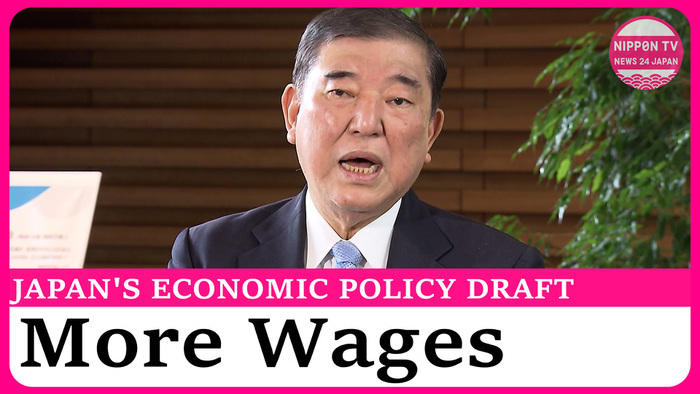
A draft of the Japanese government's annual Basic Policy on Economic and Fiscal Management and Reform rejects tax reductions that are not backed by revenue sources as a means to increase people's net income.
Instead, the document obtained by Nippon TV calls for establishing wage increases that outpace rising prices while the overall economic pie expands.
The government will seek to realize a growth economy driven by increases in wages and to raise real wages by about 1 percent, thereby improving both income and productivity.
As for primary balance, which indicates whether the government's policy expenses are being covered by tax revenues and other income, the draft effectively retreats from the earlier target of achieving a surplus by fiscal 2025, which runs through March 2026.
The new target is to achieve a primary balance surplus for the national and local governments combined as early as possible during the fiscal years 2025 to 2026, through March 2027.
As for rice policy, the working paper talks about plans to proceed with comprehensive measures, including facilitating the distribution of the government's stockpiled rice and providing clear and detailed information to consumers, in order to stabilize the soaring prices by ensuring stable supply of rice.
The government also plans to work on making concrete revisions to paddy field policies and reviewing and reinforcing the system for supporting the consolidation of farmland so as to enable producers to engage in farming with motivation.
As crimes and nuisance by foreign nationals are becoming social issues, the draft calls for strengthening the command system encompassing the entire government, such as meetings of relevant government ministers, to realize an orderly society in which Japanese and foreign nationals can coexist.
The government is scheduled to finalize the policy in June.