
$7 billion 'Dark Market' revealed: Illegal seller boasts fraud strategy and what is inside the illicit market, through international investigative reporting
Behind the rise in fraud cases in Japan lies a ‘dark market’ with a scale of 7 billion US dollars (1 trillion Japanese yen). There, fake IDs such as driver’s licenses, bank accounts, and websites known as tools used for fraud — are being bought and sold, creating a breeding ground for crimes. The Nippon TV investigative news team collaborated with the ICIJ, International Consortium of Investigative Journalist and experts to uncover this reality.

■A woman who lost over 20 million yen
"I’d spent most of my life raising kids and have been on my own for so long.”
That was what Kaori (not her real name), in her 60s and divorced more than 20 years, spoke to us.

(Photo: Kaori holding a smartphone )
Hoping for a new relationship, she started using a dating app in 2024. In late September 2025, she met someone calling himself ‘Akihiro’ from Kanagawa Prefecture.
A week after they started chatting on the messaging app LINE, Akihiro said, he wants to be her partner for the rest of their lives and invited her to invest together for their future. Kaori registered on a site he introduced, thinking it might be a good way to learn. When she carried out somewhat-like currency transactions on the site, her balance increased by about 200 USD in just 30 minutes.
When she requested a partial withdrawal on the site, the money was deposited in her bank account the next day. Trusting him, Kaori increased her transfers. Akihiro then persuaded her to use cryptocurrency, saying the fees are lower. Eventually, her displayed balance reached about 67 million yen, about 450K USD. Kaori recalls she was happy to see the money grow and got more hooked.

(Photo: Kaori’s LINE post with Akihiro, surprised that her balance had increased )
However, when she tried to withdraw the full amount, something strange happened. The site’s operator told her she needs to upgrade her account to withdraw the money and demanded her to transfer 10 million yen. Thinking that she could repay the loans after withdrawal, Kaori believed this and borrowed millions of yen from consumer finance companies and also relatives and sent the money as Akihiro instructed.
When a relative warned her that this may be fraud, Kaori contacted Akihiro — but he stopped replying to her messages. In the end, Kaori sent over 20 million yen and was scammed. Now, she works day and night to repay her debts.
■Where did the money go?
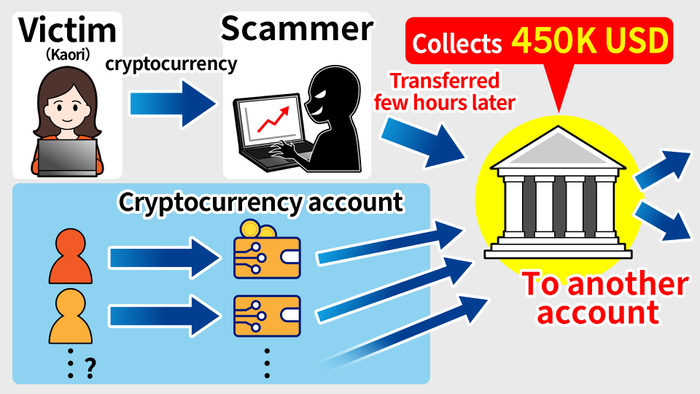
Where did the money go — the money Kaori thought she had sent to her account on the investment site? With the technology help from U.S.-based blockchain analytics platform company Merkle Science, the investigative team analyzed the transactions. The cryptocurrency she sent was transferred to another wallet within hours.
The destination wallet repeatedly exchanged cryptocurrency using methods that make third-party tracking difficult — movements considered 'money laundering', according to an analyst. Records show that this wallet indirectly collected over 450K (4.5 million) USD from a Japanese crypto service between July and October 2025, suggesting there are other victims in Japan.
According to Japan’s National Police Agency, financial losses from social media-based investment and romance scams reached about 137 billion yen by the end of October 2025, already surpassing 2024’s total and continuing to rise sharply. Online fraud has become a growing global concern.
What lies behind the growing fraud? Nippon TV spent several months investigating with experts and eventually uncovered a ‘dark market’ for fraudsters — a place where tools used for scams are bought and sold.
■More than 350,000 accounts in the dark market
The dark market that Nippon TV uncovered operates mainly on Telegram, an app known for its anonymity. The market had over 350,000 user accounts. Their posts were mostly in Chinese. Groups were divided by category and country, including ones labeled ‘Business for Japanese.’

(Photo: We found that more than 350,000 user accounts participated )
And there, driver’s licenses, health insurance cards, and ‘My Number Cards’ — images resembling IDs were displayed. They were advertised as editable in terms of name and age, suggesting forgery. Each cost around 5 to 10 USD and could be used to create dating app accounts. Also, ‘AI face swapping’ services were sold.
Fake investment websites were shown too, promoted as ‘completely undetectable by users.’ When tested, the websites allowed easy manipulation of displayed balances — the same type Kaori fell victim to.

(Photo: Investment websites used for fraud were being sold)
This dark market operates through an escrow system managed by the platform operator, a system where payments go through the market operator. After the buyer receives the ‘product’ and confirms its contents, the operator sends the payment to the seller. Although the market facilitates illegal trade, it was advertised as ‘safe to use’ because of this system.
■'$10,000 fraud kit '
To uncover the inner workings of the dark market, the reporting team posed as a ‘customer’ and contacted a seller running a Japanese-targeted group in Chinese.
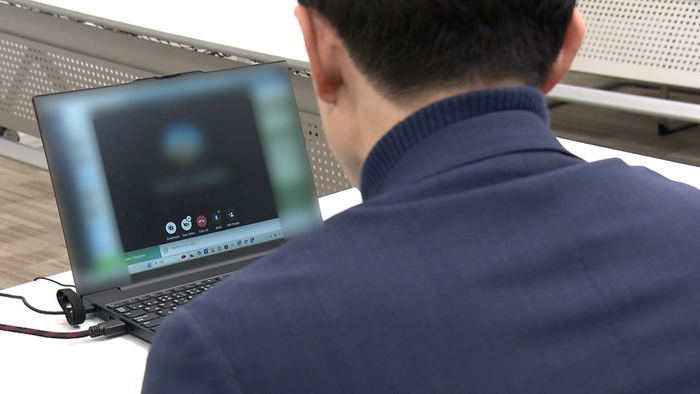
Team: “What’s the price of a driver’s license? ”
Seller: “What will you use it for?”
Team: “Ah, I see… you mean the purpose…”
Seller: “Fraud? What kind?”
Team: “I’m still new to this…”
Seeing the ‘customer’ as a beginner, the seller said he could teach everything about fraud. He offered ‘a set of tools’ — IDs, bank accounts, etc. — for $10,000 (about 1.5 million yen). If the fraud succeeded, he would take a 15% cut. He also offered money laundering services.
Team: “Are there scammers targeting Japanese people?”
Seller: “Oh yes, I’ve taught many of them.”
Team: “Do they succeed?”
Seller: “Of course — that’s why this business lasts.”
The seller even sent an image of a Japanese driver’s license, insisting it was real, genuine. But when the team revealed they were journalists, he said that interviews cost money and hung up.

(Photo: A dark market website where various links and goods are bought and sold)
The dark market appears to support various crimes and gray-market industries beyond investment scams. For sale in dark-web marketplaces are items such as 'fake gold' said to be manufactured using tungsten and hacking tools technologies that claim to monitor smartphones remotely, with descriptions boasting the ability to intercept capture passwords. There are also developers creating online casinos and sports betting sites in languages of countries where gambling is illegal. Despite the illegality of such platforms in Japan, some vendors explicitly offered services with Japanese language support.
Many of these 'products' are multilingual, suggesting that the reach influence of the dark market extends far beyond Japan to the rest of the world. In groups used for exchanging job information, posts were found seeking individuals to work in locations including Tokyo, Pakistan, the United States, and New Zealand.
■ Dark market operators also have a base in Japan
Nippon TV also investigated through U.S. court documents shared by the International Consortium of Investigative Journalists (ICIJ). The investigation revealed that a specific corporate group has been continuously involved in operating dark markets and has even established a base in Japan. That organization is the Huione Group, which is based in Cambodia.
Huione(HUIONE) presents itself as a financial group offering payment services, but it has been accused of involvement in dark market operations and money laundering. According to various reports, Huione told customers that it had ‘acquired a 30% stake’ in the market we infiltrated and encouraged them to use it.
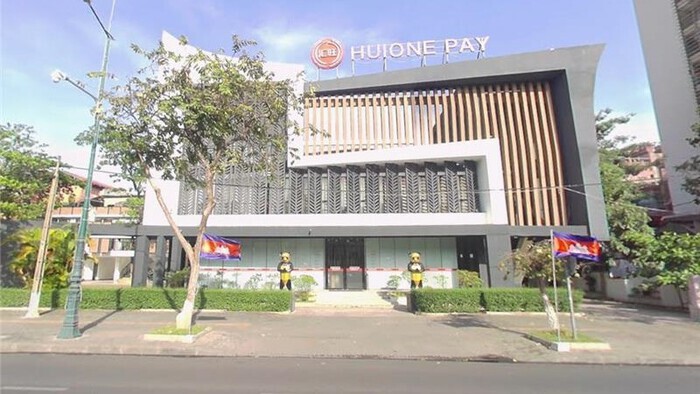
(Photo: Huione Group office in Phnom Penh, captured on Google Street View in December 2022)
We found a company also in Japan named Huione, which was established in Tokyo in August 2024. Our team reviewed corporate registrations in Japan, Cambodia, Poland, and the United States. Then found that the person who set up Huione in Japan also runs a company in Cambodia that uses ‘huione.com’ for its contact information. In Poland, a person with the same name is registered as the representative of Huione Crypto, a subsidiary of the Huione Group explicitly named by the U.S. government. The address and name registered for the Cambodian company match those of the Japanese company. The address is in Shenzhen, China, and Polish filings indicate that a Chinese passport was submitted.
In mid-November 2025, we visited the registered address of this company in Tokyo.

It turned out to be a rental office. A staff member there said they have not seen the company members lately. We emailed questions to Huione Group and its U.S. legal representatives, but some messages were returned as undeliverable, and we did not receive any responses.
In Cambodia, 16 Japanese nationals were detained by local authorities in December for alleged involvement in fraud schemes, and according to local media, 13 other Japanese were detained in November. Computers and mobile phones were seized from their base, and authorities believe the suspects were engaged in international fraud targeting Japan and other countries from Cambodia.
In October 2025, U.S. authorities decided to exclude the Huione Group from the financial system for its involvement in operating illegal markets, laundering fraud funds, and collaborating with North Korean cybercrime groups. At the same time, they announced indictments and asset freezes against members of Prince Holding Group, a Cambodian company accused of running fraud bases. These actions against the two organizations were described as ‘the largest action ever taken against Southeast Asia’s cybercrime networks.’
According to Merkle Science, the account to which Kaori's funds were transferred had previously made transfers to the Huione address—the one barred by the U.S. government for its involvement in money laundering.
■Dark market scale: $7 billion
Tom Robinson, Chief Scientist at UK-based blockchain analytics firm Elliptic, explains that the dark market is ‘an enabler behind the explosive growth of fraud.’
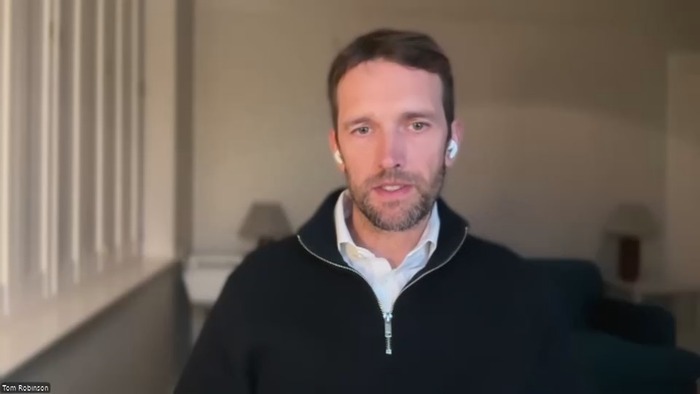
(Photo: Tom Robinson, Chief Scientist at Elliptic)
The market the team investigated undercover is the world’s largest, with transactions totaling at least $7 billion in the past 12 months. About 30 similar markets exist globally. Robinson urges governments to ‘monitor these markets and pressure Telegram to shut them down'.
After we published our original report in Japan in December 2025, the Cambodian government announced that they detained Chen Zhi, the chairman of Prince Holding Group, on January 7. Chen was handed over to Chinese authorities. According to Elliptic, just days after his arrest, the dark market investigated by Nippon TV significantly scaled back its operations.
The International Consortium of Investigative Journalists (ICIJ), headquartered in Washington, D.C., works in collaboration with media organizations around the world and is known for reports such as the ‘Panama Papers.’ For this investigative report project on online fraud and shadow economy, 37 media outlets from 35 countries, including Nippon TV, participated. The team conducted interviews with dozens of victims worldwide, shared court documents and expertise in tracing crypto assets, and reported on the methods of fraud and the reality of money laundering.
Article by: Nippon Television Investigative news team